
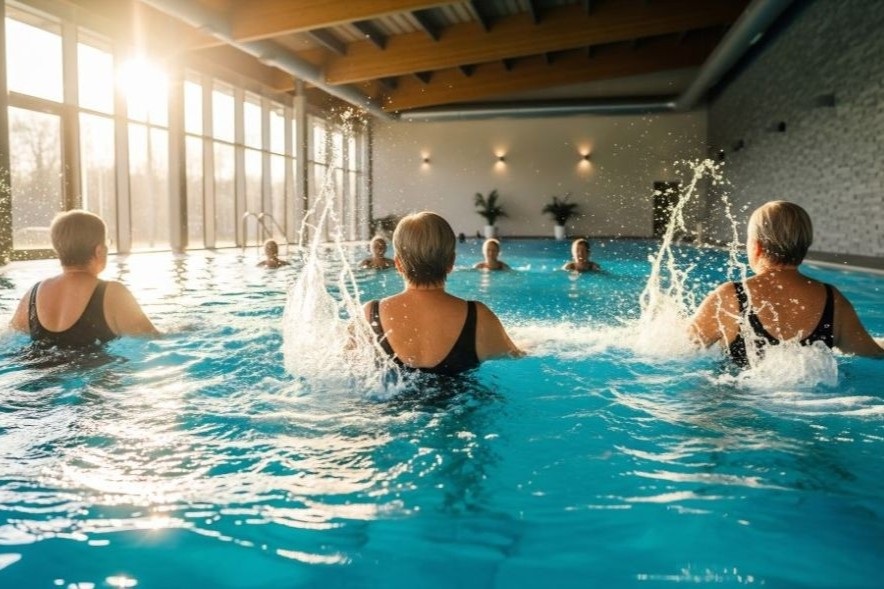
Many people who are recovering from injury, surgery or struggle with chronic pain find it hard to exercise on land. Stiff joints, weakness or pain can make traditional exercise difficult. Hydrotherapy offers a gentle but effective alternative with classes conducted in warm water and a physio always nearby.
The Physio Clinic’s hydrotherapy classes provide structured, individualised programs in a supportive group setting. Unlike generic pool exercise sessions, each person follows their own tailored exercise plan so you can work towards the goals that are important to you.
Hydrotherapy classes run by physios have many potential benefits including:
- Reduced pain, swelling and muscle tension
- Improved balance in a safe environment
- Increased strength without heavy weights or high impact
- Tailored and specific programs
- Enjoyable and supportive group environment
- Long lasting improvements
Before your first session you will have an appointment in the clinic with a physiotherapist to discuss your needs and evaluate your current capability. The physio will then design an individual exercise program based on your condition, goals and ability.
Every person performs their own targeted exercises. The physio closely monitors technique, ensuring movements are performed safely and effectively while progressing the program as strength and mobility improve to achieve long term benefits. Not only will we check in on your program, we also love to connect and keep up to date with what’s going on in people’s everyday lives!
If pain or injury is limiting your ability to exercise, physiotherapy-led hydrotherapy may help you move with confidence again. Get in contact with us to see how a personalised hydrotherapy program could support your recovery.
Bailey Preston – Physiotherapist
For more information, phone The Physio Clinic on 8342 1233 or book online
References:
- Faíl, L. B., Marinho, D. A., Marques, E. A., Costa, M. J., Santos, C. C., Marques, M. C., Izquierdo, M., & Neiva, H. P. (2022). Benefits of aquatic exercise in adults with and without chronic disease: A systematic review with meta-analysis. Scandinavian Journal
of Medicine & Science in Sports, 32(3), 465–486. https://doi.org/10.1111/sms.14112 - Jackson, K., Kang, J., Furness, J., & Kemp-Smith, K. (2022). Aquatic exercise and mental health. Complementary Therapies in Medicine, 66, Article 102879. https://doi.org/10.1016/j.ctim.2022.102879
- Mirmoezzi, M., Irandoust, K., H’mida, C., Taheri, M., Trabelsi, K., Ammar, A., Paryab, N., Nikolaidis, P. T., Knechtle, B., & Chtourou, H. (2021). Efficacy of hydrotherapy treatment for the management of chronic low back pain. Irish Journal of Medical Science, 190(4), 1413–1421. https://doi.org/10.1007/s11845-020-02447-5
- Wang, T., Wang, J., Chen, Y., Ruan, Y., & Dai, S. (2023). Efficacy of aquatic exercise in chronic musculoskeletal disorders: A systematic review and meta-analysis of randomized controlled trials. Journal of Orthopaedic Surgery and Research, 18, 942. https://doi.org/10.1186/s13018-023-04417-w